The AI Enablement Brief · Feb 23, 2026
Beyond the Tool: The Three Levels of AI Maturity
Why true AI Enablement is a mental toggle, not just a software installation.
A lot of brands and agencies are using AI today, and most of them still treat it like a tool. They view it as a peripheral asset—something you pick up to solve a specific problem and put back down when you’re finished.
And although it absolutely is a tool, I believe it is something much more profound. It is a mindset shift. It’s a fundamental change in how we perceive work, problem-solving, and creative output.
The words we choose matter. They shape our expectations and our results, and that is why I like to talk about AI Enablement.
The Mindset Shift
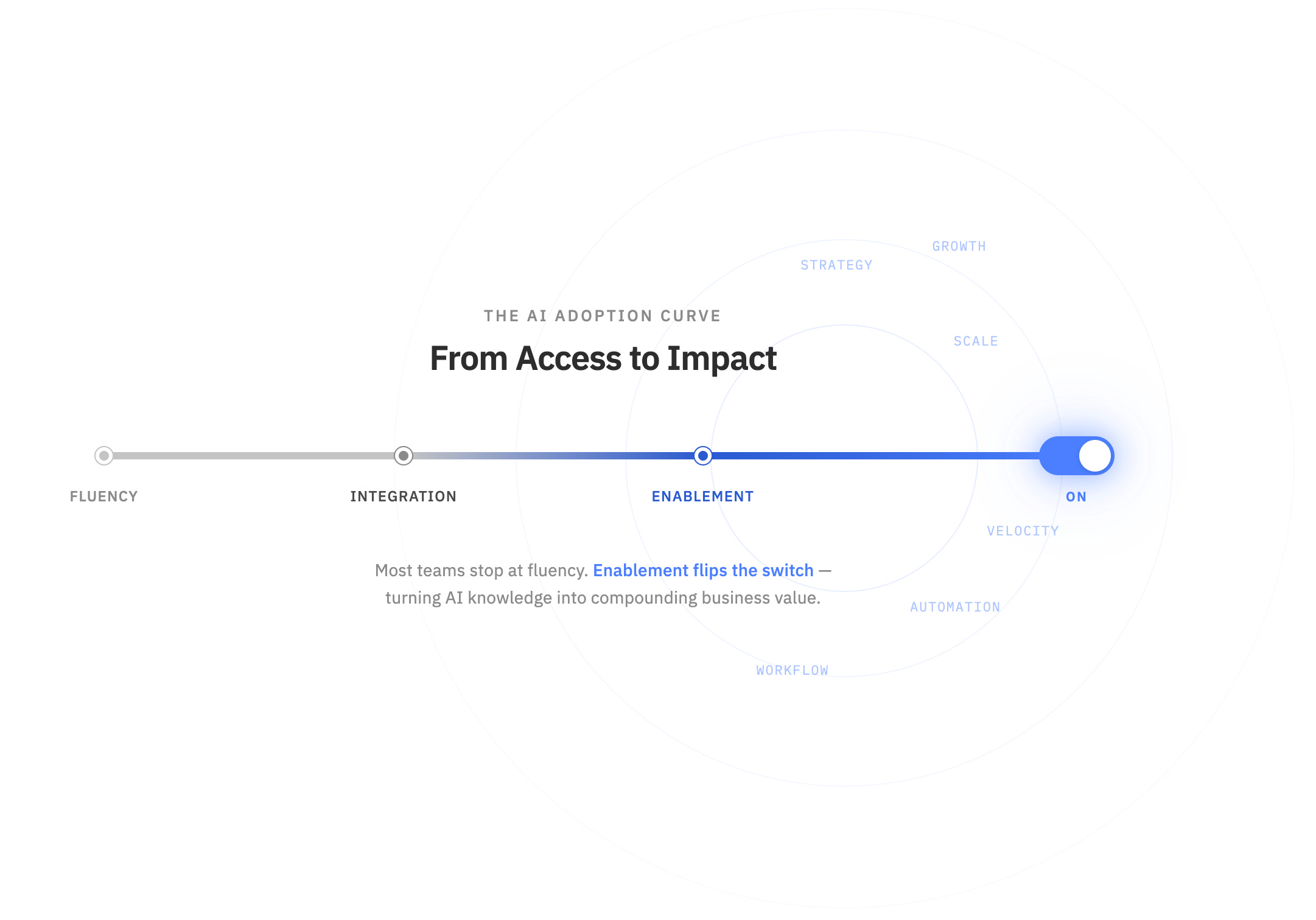
When we look at how organizations approach this technology, we usually see three distinct levels.
Most teams get stuck at the first two, viewing AI as a way to shave off minutes rather than a way to expand their entire mission.
Language shapes reality: Calling it “Enablement” shifts the focus from the software to the human. It implies that we are giving people new powers, not just new programs.
The Incremental Trap: Integration creates speed, but Enablement creates value. If you only focus on speed, you are just doing the same old things slightly faster.
The Toggle Moment: There is a specific, identifiable point where a user stops “using” AI and starts “thinking” with it. This is the moment the competitive gap begins to widen.
The AI Maturity Framework
To understand where your organization stands, you must distinguish between knowing the tool and mastering the mindset. Each level represents a higher degree of intimacy with the technology.
1. AI Fluency (The Baseline)
This is the entry point. It means you know how to type a prompt into ChatGPT or Gemini. You can edit an email, summarize a long meeting transcript, or write a basic social media caption.
But today, anyone can call themselves AI fluent. It is the new literacy. Knowing the terminology or having a subscription doesn’t mean you know how to orchestrate these models to get the best output. Fluency is knowing the alphabet; it isn’t necessarily writing poetry.
2. AI Integration (The Workflow)
This is where the focus shifts to tools and workflows. It’s about taking your existing processes and adding an AI engine to make them move quicker.
You’ve connected the pipes, perhaps through APIs or automated sequences, but the focus is still on the “how” rather than the “why.” You are more productive, yes, but you are still operating within the same old mental boundaries. The goal here is usually efficiency, not transformation.
3. AI Enablement (The Mindset)
This is the level that moves beyond the tool and into the human mind. I like to think of it as a toggle. It’s a mental switch that happens when you finally see the full, compounding value that AI can drive across an entire business.
Enablement is thinking “AI-first.” Whenever a task lands on your desk, you aren’t just thinking about the deadline or the traditional steps to reach it. You are instinctively thinking about how to leverage AI to achieve it faster, with greater quality, and with more creativity than was ever possible before.
You aren’t just using AI to finish the task; you are using AI to rethink the task entirely.
The Bottom Line
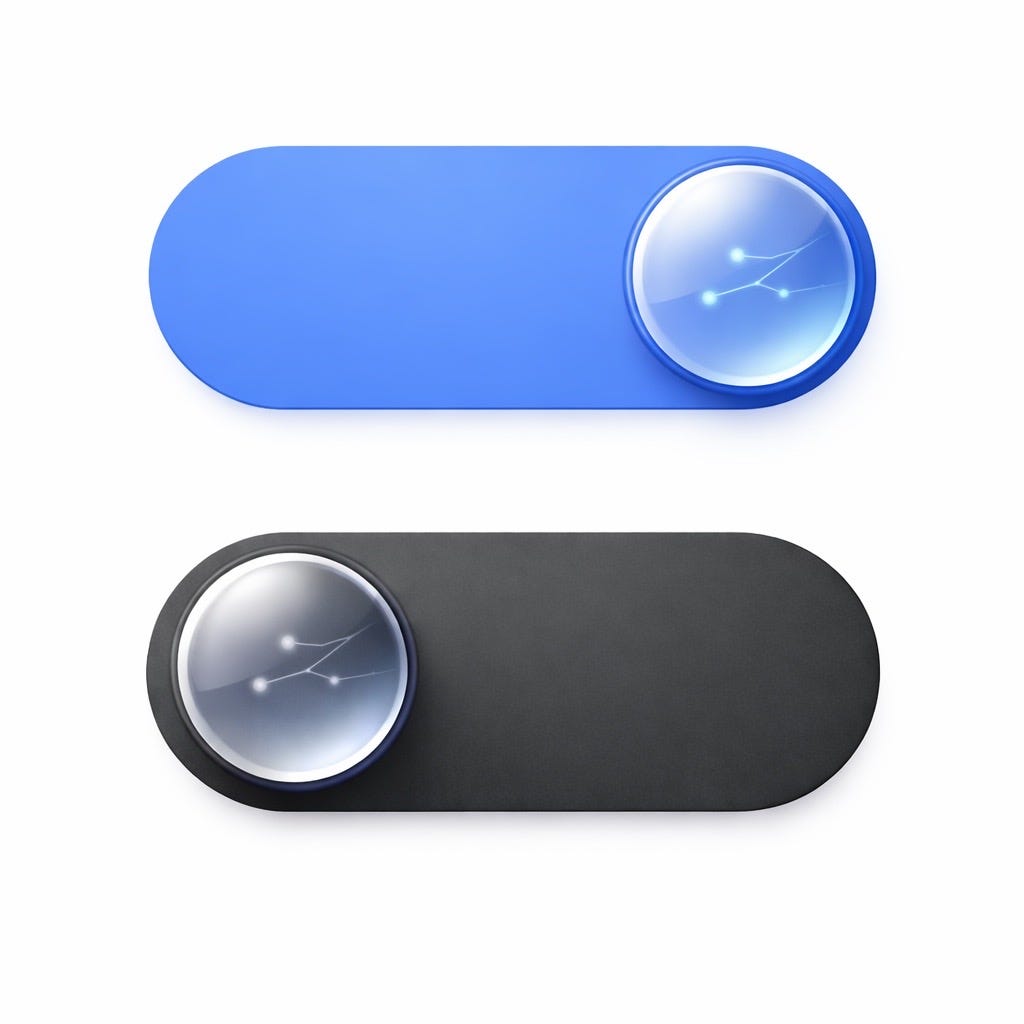
The logo of the AI Enablement Brief encapsulates this exact moment—the toggle between simply using a tool and transforming your way of thinking.
It’s about the “click” that happens when the technology becomes an extension of your own intelligence.
Organizations focused on fluency or integration will see incremental gains. They might save some time, but they won’t change the game.
But organizations that ensure their employees are AI enabled will see a level of value that their competitors simply can’t match. They won’t just be faster; they will be better.
It starts with the mind. The rest is just software.
Think AI-first.
Is your team just using new tools to do old work, or have they actually flipped the toggle?