The AI Enablement Brief · Feb 20, 2026
From Producer to Supervisor: The Era of Claude Cowork
Why the 3-day workweek isn’t a clickbait dream anymore—it’s a management shift.
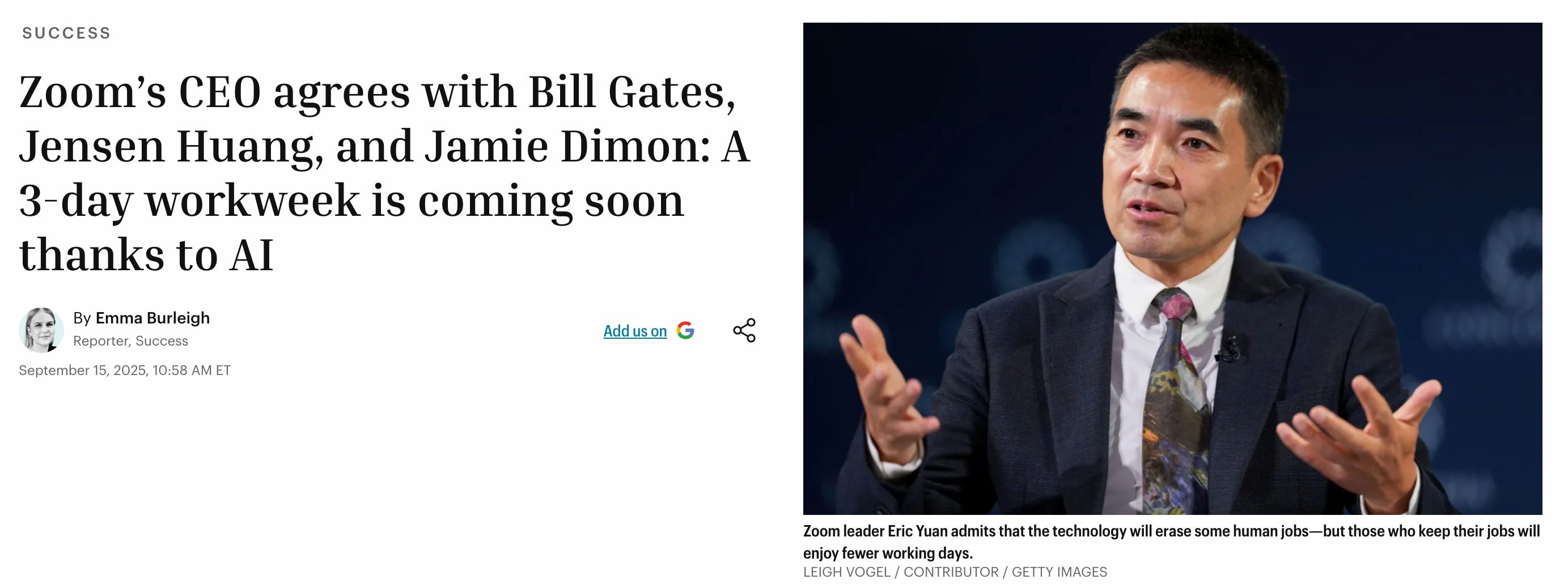
Earlier this year, Zoom’s CEO mentioned that AI could give us a 3-day workweek.
I was skeptical. At the time, it felt like another headline-grabbing prediction designed for clicks rather than reality—a classic case of overpromising on technology that still required heavy lifting from humans.
But after spending a few weeks with Claude Cowork, my perspective has shifted.
We aren’t at the 3-day workweek yet, but we are undeniably entering a whole new era of work.
The difference now is that the AI isn’t just assisting with the work; it is beginning to own the execution.
The Automation of Precision
The tasks that used to consume our days—the “grunt work” of the mind—can now be handled with a level of precision that was once reserved for humans.
We aren’t just talking about basic drafting; we are talking about high-level cognitive labor that requires logical consistency and deep domain knowledge:
Building financial models: Generating complex projections from raw data without the manual spreadsheet fatigue.
Proofreading and Synthesis: Analyzing 100-page documents for subtle inconsistencies that even a tired human eye would miss.
Performing advanced audits: Checking compliance and internal logic against vast datasets in seconds.
Building go-to-market plans: Connecting disparate market signals into a cohesive, actionable strategy.
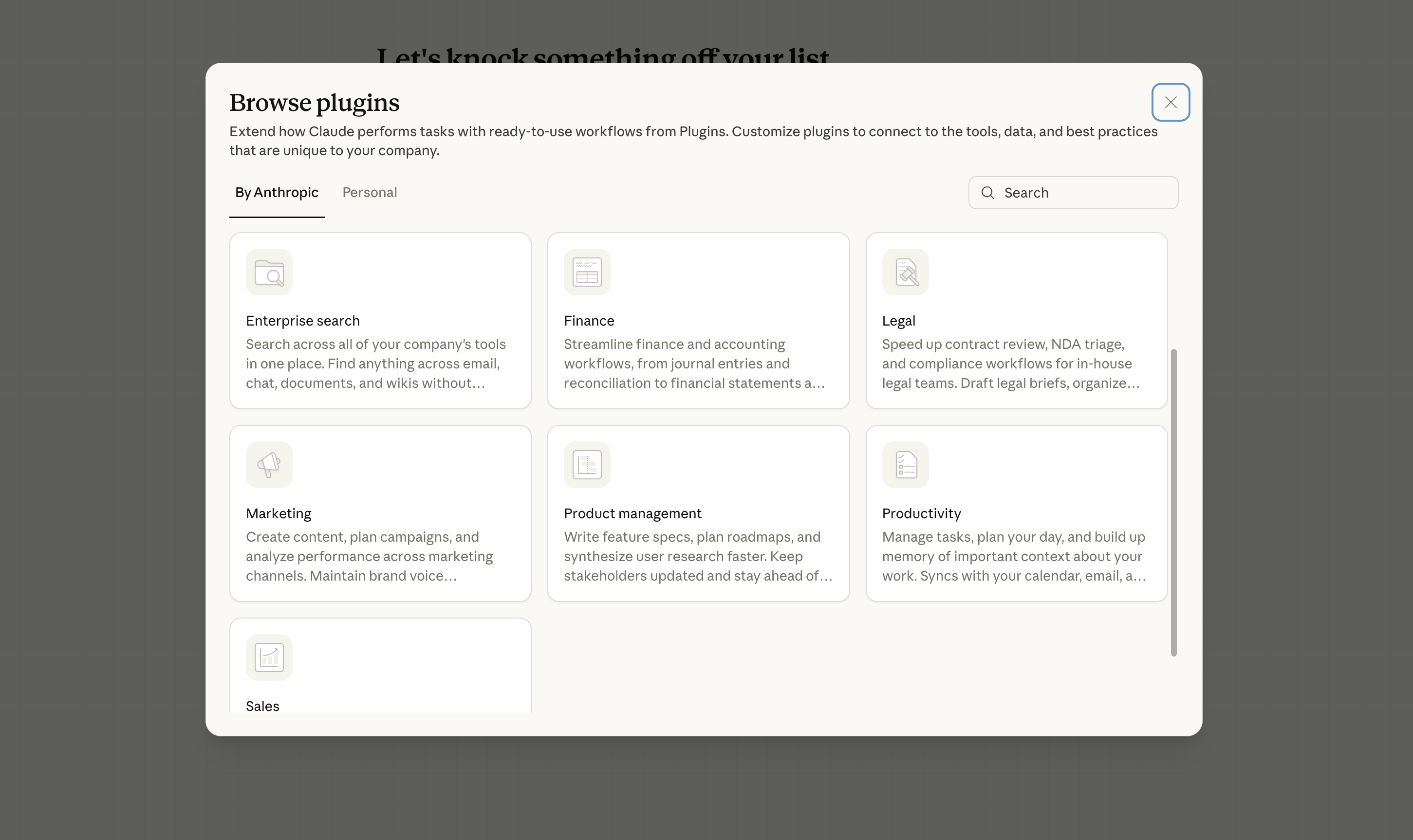
I believe Claude Cowork will be as disruptive to knowledge workers as Claude Code was to developers. It removes the “blank page” problem and the “execution bottleneck” simultaneously.
The Input Over Output Model
We’ve already seen this play out in software engineering, providing us a roadmap for the rest of the corporate world.
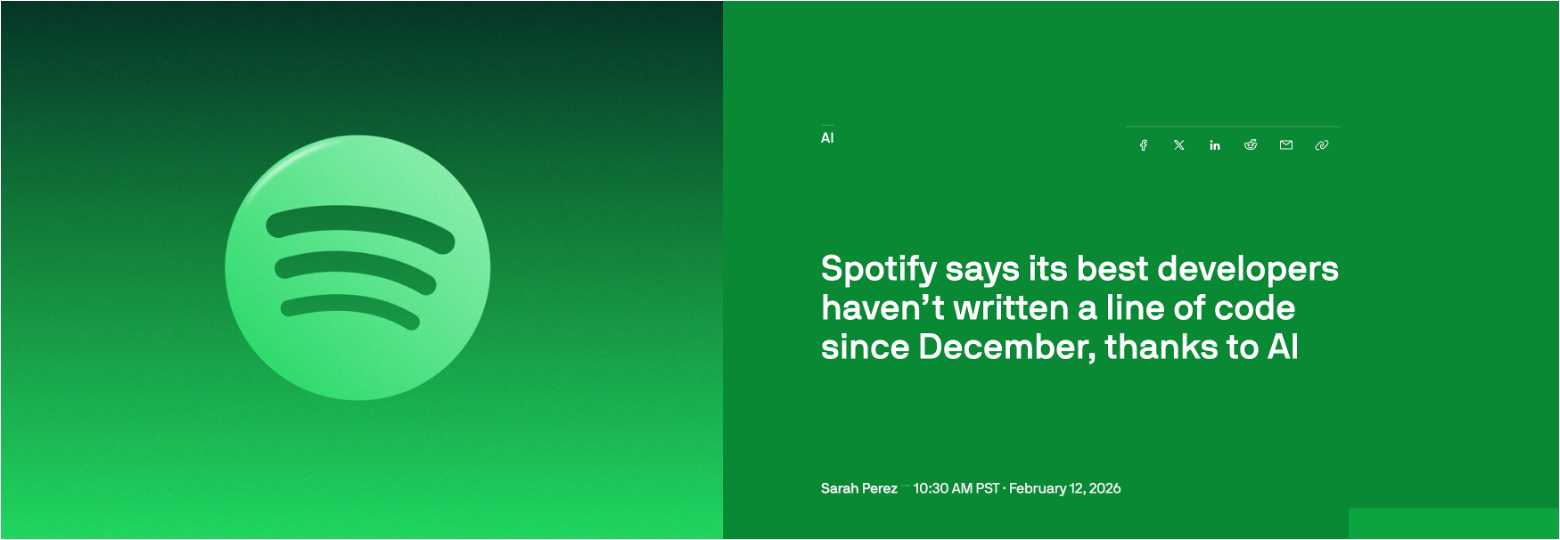
Spotify recently revealed that their best developers haven’t written a single line of code since December.
They aren’t building anymore. They’re supervising.
By next year, I believe most enterprises will say the same about their knowledge workers. The shift is fundamental: it’s less about the output, and more about the input.
In this new era, our value isn’t in producing the work. It’s in what we feed the LLM and how we manage it to produce results that exceed our own capabilities. We are moving from being the “hands” to being the “brains” of the operation.
The Knowledge Worker’s New Framework:
Setting the guardrails: Defining the “why” and the “how” before the “what.” This means knowing exactly what “good” looks like before the AI starts.
Defining parameters: Precise context injection. The quality of your result is now a direct reflection of the quality of your instructions.
Auditing the logic: Moving from creator to editor-in-chief. You no longer build the car; you inspect the engine to ensure it’s running perfectly.
The Reality Check
Of course, we are still in the early days, and the friction is real.
Cowork is in research preview, it’s currently limited to Macs, and managing your “tokens” requires a level of intentionality that most aren’t used to yet. You have to be deliberate about what you ask and how you spend your computational resources. It requires a mindset shift from “unlimited typing” to “strategic resource management.”
But the value is exponential.
Just look at software engineering curriculums. They are being redesigned from scratch to teach auditing over syntax. Students are learning how to debug logic rather than memorize brackets.
My prediction? The same thing happens to the rest of us in the next 12-24 months.
Marketing, finance, and legal education will soon prioritize “AI orchestration” over traditional “execution.”
Our job isn’t to work harder. It’s to direct better.