The AI Enablement Brief · Mar 6, 2026
Learning by Doing
The fastest way to acquire new skills hasn't changed. AI just lowered the floor.
A few weeks ago, I did something that made me feel like a complete beginner again.
I opened a terminal.
I’m not a developer. I’ve spent the last year building AI workflows, automations, and custom tools — but always through interfaces. Chat windows. Drag-and-drop builders. Clean, forgiving UIs designed for people like me.
Claude Code is not that.
Going from a chatbot to a terminal is night and day. New commands. New file structure. A whole different mental model for how you interact with a machine. I won’t pretend it wasn’t intimidating.
But I committed to the learning anyway. Because I believe in one thing above almost everything else when it comes to acquiring new skills:
You have to do the work.
The Doing Is the Shortcut
There’s a version of learning that feels productive but isn’t. Reading articles. Watching tutorials. Taking notes on courses you never finish. I’ve done all of it. It has its place.
But nothing compresses the learning curve like actually building something.
This isn’t a new idea. It’s how you learned to ride a bike, run a meeting, write a brief. The reps are the curriculum. The mistakes are the lessons. The discomfort is the signal that something real is happening.
I spent a solid part of the last year learning AI by building — custom workflows for my team, internal tools, automations that actually get used. Each one taught me more than any course could. And each one made the next one faster.
Claude Code felt like resetting to zero. But it was the same principle.
The Terminal Moment
I spent a few evenings just getting oriented. Podcasts on commutes. YouTube walkthroughs at night. Reading other people’s project breakdowns on X. Then I picked a personal project — something small enough to finish, meaningful enough to care about — and I got to work.
A couple of hours every evening. Some time on weekends. Frustrating at first. Then oddly satisfying as the pieces started clicking.
A few days in, I had my first real project live.
The result genuinely surprised me. Not because the output was perfect — it wasn’t. But because I’d built something real, from scratch, using a tool that had felt completely foreign just days before.
That’s the thing about learning by doing. The progress is invisible until it isn’t.
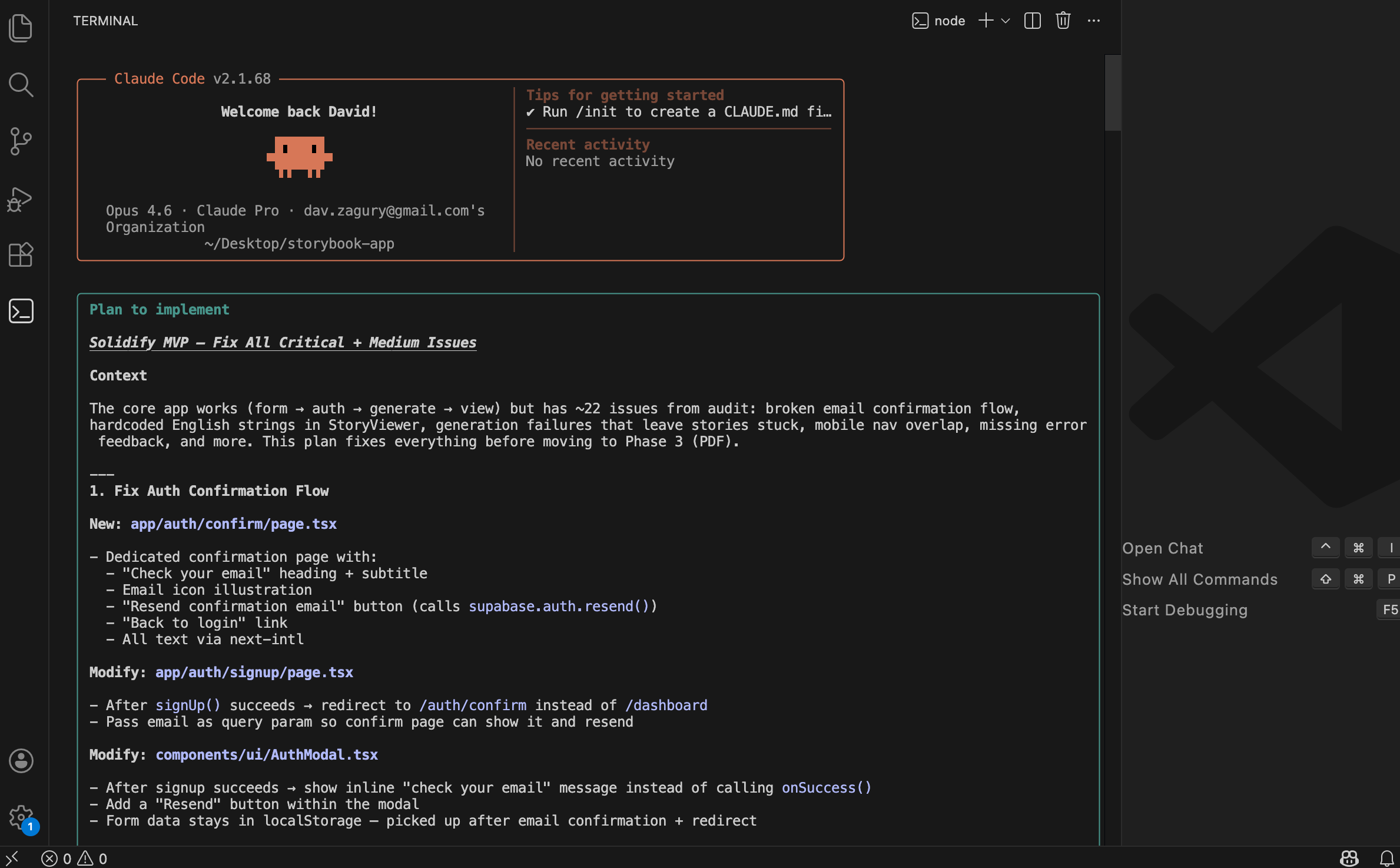
The Map Before the Territory
Here’s the practical thing I wish I’d known on day one — and the tip I keep sharing with anyone who asks about getting started with Claude Code.
Don’t open your terminal first.
Before you touch the terminal, use the regular Claude interface to map out your entire project. Have a full conversation about what you’re building. Ask Claude to think through the architecture with you. Then — and this is the key step — ask it to write the complete Claude Code instructions directly inside the chat.
Review them. Edit them. Ask follow-up questions. Refine until they’re clear.
Then paste the whole thing into your terminal.
What this does is decouple the thinking from the doing. The chat interface is forgiving and conversational — it’s the right place to figure out what you actually want to build. The terminal is for execution. When you arrive there with a clear, reviewed set of instructions, you skip the confusion and keep the momentum.
It’s not a hack. It’s just respecting the difference between planning and building.
What This Really Means
I’ve been thinking about why the Claude Code experience stuck with me — and it’s not really about the tool.
It’s about what happens when you commit to learning something that makes you uncomfortable.
Most people in marketing and business are sitting on the edge of a dozen skills they haven’t developed because the entry point feels too steep. Coding. Data analysis. Building internal tools. Understanding how AI systems actually work under the hood.
The barrier isn’t intelligence. It’s the willingness to feel like a beginner again.
AI has done something interesting to that equation. It has lowered the floor dramatically. You don’t need to master the underlying syntax to build something real. You need a clear outcome, a willingness to iterate, and enough commitment to push through the first few hours of confusion.
The doing is still required. The gap has just gotten smaller.
Are you sitting on a skill you’ve been meaning to develop — one you keep putting off because the starting point feels too steep?